Dafni
Phone
210 9756566
Psichikon
Phone
210 6980565
Glyfada
Phone
210 9610982
Phone
210 6444430
Pallini
Phone
210 6034681
Chaidarion
Phone
6977430971

ALPHA PROLIPSIS

Medical Laboratories - Polyclinics
Artificial intelligence and cytopathology: Where are we heading?

Artificial intelligence (AI) in cytopathology is heading towards a future of human-machine collaboration that enhances diagnostic accuracy, streamlines workflows, and expands access to care. While already used commercially for Pap test screening, AI is increasingly applied to other areas like thyroid, lung, and pancreatic cancer diagnostics, though significant challenges in data standardization and validation remain. 

Current Status

  • Established Use in Screening: The earliest and most successful commercial application of AI in pathology was for automated Papanicolaou (Pap) test screening, with FDA-approved systems in use since the early 2000s.
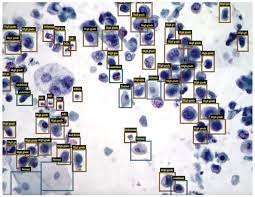
  • Assisting Tool: Most pathologists currently view AI as an assisting tool rather than a total problem solver. AI algorithms help in identifying regions of interest (ROI), counting cells, and flagging abnormal cells for human review, which improves efficiency and reduces human error and variability.
  • Expanding Applications: Research and development are actively expanding to non-gynecologic specimens, including fine-needle aspirations (FNA) of the thyroid, pancreas, and lungs, with promising results for improving diagnostic precision and risk assessment in these areas.
  • Improved Accuracy: Studies have shown that AI-assisted diagnosis can improve sensitivity and specificity compared to manual review alone. 

Future Directions

  • Enhanced Diagnostic Performance: Future AI systems will likely integrate various data sources, including clinical history and molecular test results, to provide more comprehensive predictive and prognostic insights. This moves beyond simple image analysis to a more holistic approach to patient care.
  • Workflow Integration & Automation: AI is expected to automate more routine tasks, such as initial image sorting and preliminary screening, allowing cytopathologists to focus on complex cases and critical thinking. This includes supporting rapid onsite evaluation (ROSE) during procedures.
  • Standardization and Validation: Efforts are underway by professional bodies like the American Society of Cytopathology (ASC) to develop guidelines for the clinical validation and integration of AI tools, which is crucial for widespread adoption.
  • Global Accessibility: Digital pathology and AI technologies hold the potential to enable remote consultations (telepathology), making high-quality diagnostic services more accessible in underserved or resource-limited areas.
  • Next-Generation Technologies: Research is exploring advanced techniques like self-supervised learning, multimodal models (combining images with other data), and "agentic AI" systems that can perform multistep reasoning, further transforming the field. 

Key Challenges

  • Data and Standardization: A major hurdle is the lack of large, high-quality, and well-annotated datasets across different sample types and preparation methods. Cytology samples are inherently more variable and three-dimensional than histology, making standardization difficult.
  • Regulatory and Ethical Concerns: Clear regulatory frameworks (like FDA approval for primary diagnosis) are needed. Additionally, ethical issues such as data privacy, algorithmic bias, and concerns about over-reliance on technology need to be addressed.
  • Infrastructure and Cost: High costs associated with digital scanners, robust IT infrastructure, and specialized training present barriers to implementation, especially in lower-resourced settings.
  • Human Oversight: Despite advancements, human pathologists will remain essential for final diagnoses, quality control, and interpreting results in a broader clinical context, emphasizing a human-in-the-loop model

Alpha Prolipsis' Medical Services

Your reports will be available within 24 hours of receiving the sample